Case Study 02 · Welding automation

Automated Robotic Welding with a Synchronized Rotation Platform

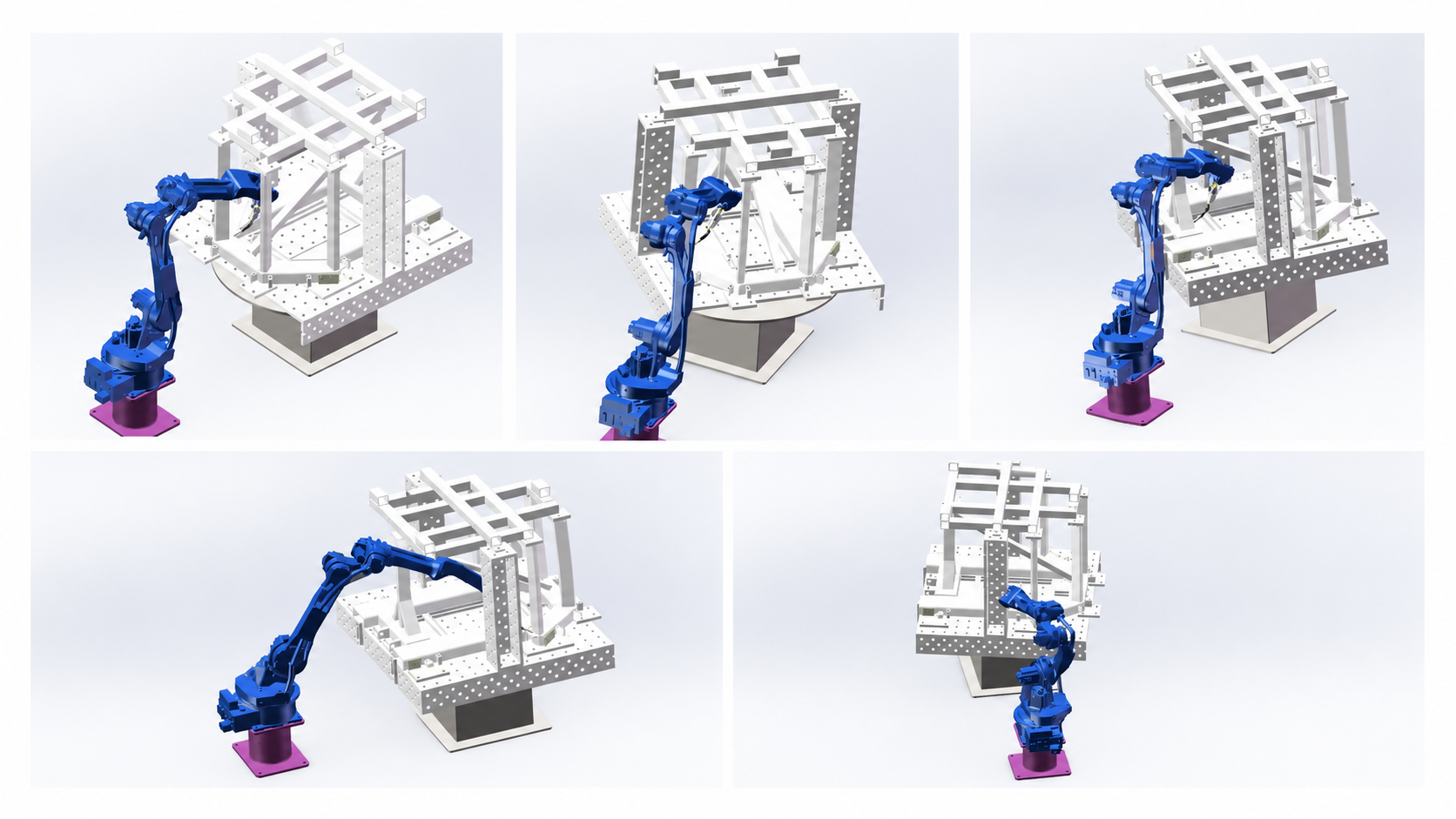
ACE Malaysia uses multi-angle work simulation to validate reach, torch access, fixture clearance and coordinated positioning before a complex frame enters automated welding.

Work simulation & cell engineering
Five simulated views of a welding robot coordinated with a rotation platform
Multi-angle accessRobot reach is reviewed around the complete frame geometry
Coordinated motionRobot path and servo positioner are planned as one process
Offline simulationPotential collisions and access limits are found before production
Fixture-led controlPart location and weld sequence start from a repeatable datum strategy

The challenge

Reach every weld while keeping the assembly stable and the torch in control.

Large frame assemblies can place weld joints behind columns, cross-members and fixture elements. A fixed work position forces long robot reaches and can compromise torch angle, access and cycle flow.

The cell therefore has to coordinate the robot, fixture and rotating work platform without introducing collisions or losing the defined assembly datum.
The solution

Robot and positioner planned as one synchronized system.

  • Simulate the complete work envelope from multiple viewing angles.
  • Rotate the fixture to present each joint at a controlled welding orientation.
  • Plan robot approach, torch angle and withdrawal path around the frame.
  • Sequence welds to reduce unnecessary repositioning and access changes.
  • Review fixture clearance before the physical cell is released.

Engineering workflow

From digital workpiece to controlled weld sequence

The simulation turns robot reach and positioner movement into a reviewable manufacturing plan.

1ModelPart, fixture & cell
2Set datumLocate the assembly
3Check reachJoint accessibility
4CoordinateRobot & positioner
5SequenceWeld path planning
6ValidateClearance review

Production controls

Three controls behind repeatable automated welding

01

Defined fixture datum

Repeatable part location gives the robot programme a stable reference and keeps assembly geometry under control.

02

Coordinated path review

Robot joints, torch clearance and platform angles are reviewed together instead of as separate movements.

03

Verification before release

Simulation findings are carried into cell proving, first-piece inspection and controlled programme release.

Engineering value

Better access decisions before steel, fixtures and production time are committed.

Synchronized rotation lets the workpiece meet the robot at a controlled orientation, rather than forcing the robot to solve every joint from one fixed position.

Offline review makes reach limits, interference risks and fixture constraints visible early, giving the engineering team a clearer route into physical cell validation.

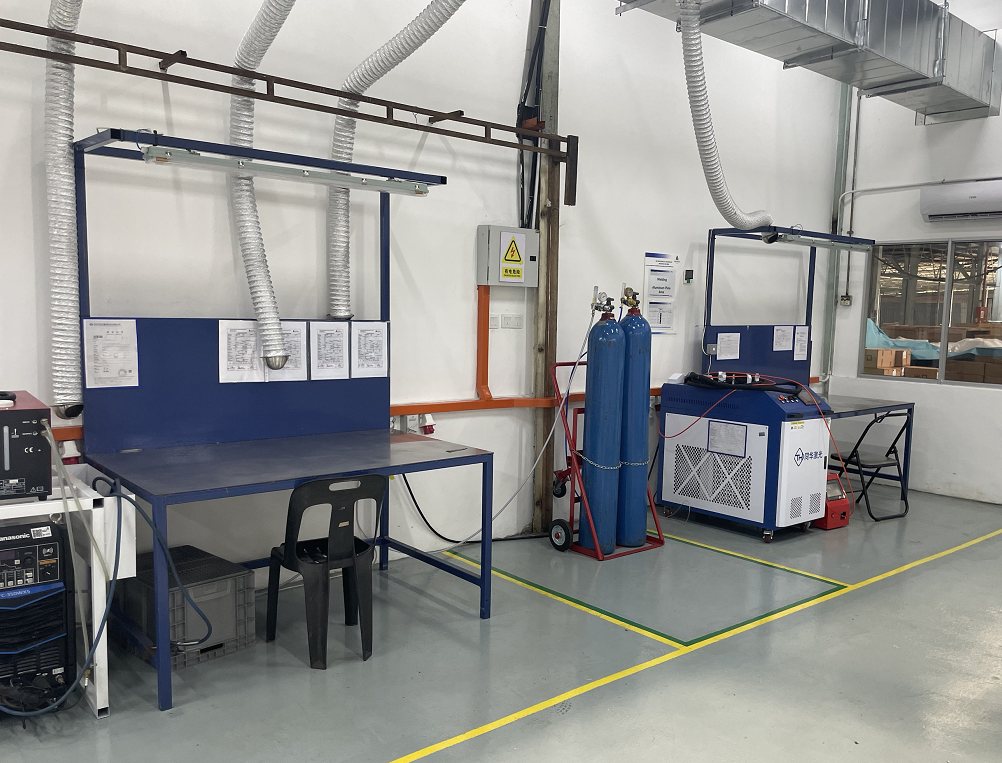
Welding work at ACE Malaysia

Planning a complex welded assembly?

Discuss geometry, access, fixture and production requirements with our Penang engineering team.

Discuss your application